Thursday, December 28, 2023

The truth about lies


This WaPo article has online tongues wagging about why the Washington Post says things like "falsely claims" and "misstatements" in reference to some things that Trump has said. The things he says are lies, the argument goes, and saying anything else is going easy on The Donald.

The truth of the matter is that things are not that simple. And here's a story to illustrate the problem.

In the run-up to the Iraq War, Dubya stated that Iraq had weapons of mass destruction, as an argument for invading the country. At the same time, Saddam Hussein made public statements that Iraq did not, in fact, have WMDs. What was true, and who was lying?

First, as we all know, Iraq did not have WMDs. But does that mean Hussein was not a liar, and Bush was? To answer these two seemingly obvious questions, let's delve into the difference between misstatements and lies.

A misstatement means nothing more than that the thing someone says is false. By that measure, it was Hussein who made a misstatement. But was it also a lie?

A lie is a statement that the speaker believes to be false, but that the speaker pretends is true. A lie is a very basic act of deception, an outward denial of an inward belief. However, what you say does not need to be false for it to be a lie. That is, not every lie is a misstatement.

Here's an example: imagine you're at work, while your spouse is at home. A friend calls you to invite you and your spouse to their birthday party, but you don't feel like going. So you invent an excuse and say, "I'm afraid we can't make it; my spouse has COVID." You hang up, and your spouse calls you to say they have COVID. In this case, what you said was true (you did not make a misstatement), but because you didn't know it was true, you were still lying.

Similarly, in our story, it's possible that Hussein was lying, but still telling the truth. The reasoning is as follows: he asked his nuclear scientists how things were going with his WMD program. Because he was a brutal dictator, those scientists were afraid to tell him the truth, and instead told him it was going great, and that they had a stockpile ready to go. As a result, Hussein falsely believed that he had WMDs, which means that his statement was a lie (even though it was true).

Now here's the cherry on the cake: there's a good chance that this entire story is itself a lie. The Americans, always eager to portray Hussein in the worst light possible, may have concocted this story to make him out to be a liar.

And what about Bush? Did he tell a lie when he claimed Iraq had WMDs? That's a difficult question to answer. You'd need to know if Bush actually believed what some people were telling him, or if he disbelieved it and said it anyway. And to know that, you'd need to be able to read Bush's mind, or access things he said or wrote down in private that would clarify that he was, in fact, lying.

Coming back to Trump, there's overwhelming evidence that Trump is an inveterate liar. There are countless cases of Trump not just making misstatements, but also telling outright lies. The perfect example of this is him losing the election. You could argue that in the first few days after the elections, Trump genuinely believed he hadn't lost. But his persistence in that belief, despite everyone around him saying the opposite, and his repeated, pigheaded and illegitimate attempts to make it true, prove it to be a lie.

However, it doesn't follow that anything that comes out of Trump's mouth is a lie, even if what he says is demonstrably false. The crucial fact is not the truth of falsehood of what he says, but his belief as to the truth or falsehood. I suspect that this is why WaPo is very cautious in calling Trump a liar.

Thursday, November 23, 2023

What you may not know about Geert Wilders


Both at home and abroad, Geert Wilders, the leader and sole member of the populist PVV party, which won a quarter of the vote in the Dutch elections of 22 November 2023, has been much debated. Some have claimed that his policy proposals have redefined the Dutch political landscape. That much is true. Others have said that his frank, outspoken views of Islam have forced traditional left-wing parties to reexamine their core tenets. That is true as well. Yet others have rightly pointed out his uncanny ability to dominate political debate in the media, whether the topic is the complex problems caused by immigration from North Africa and Eastern Europe, or the uncertain future of the European Union.

But among all the essays, opinion pieces and debates, many of his critics, not to mention his supporters, seem to have overlooked one very elementary aspect of Geert Wilders. This is an aspect that I feel is crucial if we are to complete the nuanced and multifaceted portrait that we have all made of him. And that is the fact that he’s a despicable asshole.


Can we truly make sense of this man if we disregard the elephant in the room: the persuasive evidence that Wilder is a big steaming turd, consisting of crude, rude, self-aggrandizing megalomania? Surprisingly, even his biographers, who have delved into almost every aspect of his life, from the mysteries surrounding his financial backers to his my-way-or-the-highway flavor of in-party politics, have failed to remark that Wilders is a bottom-feeding windbag, a demagogue, all talk and zero substance, always happy to infuriate without contributing to society in a meaningful way. He appeals to people's basest instincts, bringing out the worst in people, for no other reason that he himself is scum, a depraved, heartless rat of a man, with neither integrity nor principles.


Since no-one else had taken the effort to point out this basic fact about him, I felt the need to make this known, in case some less astute observers had failed to realize this. If, in sharing this insight, I have stated the obvious, I hereby offer my heartfelt apologies.


Sunday, November 19, 2023

Fondant potatoes

 I'm always looking for new ways to make potatoes. This one is fun to make, fun to look at, and the result was great --much better than I expected. I made this as a side dish with some redfish from the oven, which worked perfectly together.

Mine didn't look as nice as these, but they tasted awesome.


To start, you need to create a bunch of roughly cylindrical pieces of potato, all the same height (about 5cm/2in) and similar width (that of a medium potato):

  • To achieve the same height, create one piece, then use it to "measure" the height of all the other pieces. 
  • To achieve the same width, use potatoes that are roughly the same thickness. (I ended up having to halve some cylinders.) If you want to get real fancy (and wasteful), get yourself a round cookie cutter shape to make little towers of perfectly identical widths.
Keep doing this until you have enough potatoes for the amount of people who will be eating this.

Submerge all the towers in a bowl of water for 5 minutes to get rid of the starch, then remove and dry with kitchen paper. Heat a good amount of neutral oil (I used sunflower oil) in a big ovenproof skillet, then place the potato towers upright in the pan. Season and fry on a medium-high fire for a good 6–10 minutes to make the bottoms crispy brown (mine veered toward black). 

Meanwhile, start boiling a good amount of stock, about 250 ml/1 cup. I made veg stock with 1/3 of a stock cube.

When the towers' bottoms are brown, turn them upside down, season again and do the same for the other ends.

Start preheating the oven at 425 F / 220C.

When the towers are brown on both ends, turn down the heat. Tilt your skillet and use a piece of kitchen paper held with tongs to get rid of (most of) the oil. 

Add a good 30g (about 2 tbsp) of butter, along with some aromatics. I used crushed unpeeled garlic cloves and some branches of thyme. When the butter is melted, use a spoon to baste the tops of the towers a bit. The butter will start to brown quickly --when it does, add the stock. Wait for things to settle down, then place the skillet in the oven, and leave it there for 30 minutes.

When you take it out, the stock will be gone. Take the potato towers out and pour the buttery sauce over it.

Saturday, November 18, 2023

Nameless vegetarian oven dish #1

 I'm following the Frische Rezepte YouTube channel, and it rarely names its recipes. The titles are just things like "I cook this EVERY DAY!" which, you know, is not a dish. Also, no you don't.

This feeds 3-4 people, without any sides or other food alongside it.


This turned out simple but nice. It does need 50 minutes in the oven, so beware of that. Here's the recipe written out, with some minor adjustments I made.

A red bell pepper
2 big tomatoes
150g feta
500g potatoes
1 small onion
3 cloves garlic
Olive oil
Big bunch of parsley
Lots of dill
3 eggs
200 ml milk (I used full-fat)
2 tbsp vegetable oil
100g flour
10g baking powder
100g cheese (I bought a bag of pre-grated cheese that I knew could go in the oven)
50g mayo
50g yogurt (I used 10% fat)

Shred the onion and 2 garlic cloves. In a tablespoon of olive oil, fry these 5 minutes. Meanwhile, dice the bell pepper, the tomatoes and the feta. Throw them in a big bowl. Grate the potatoes on a coarse grater, squeeze the water out of the grated potatoes, then add them to the bowl. Also add the fried onion and garlic. Chop the parsley and half of the dill and add them. Add salt, mix well.

Preheat the oven to 180C.

In another big bowl, beat the eggs and add the milk, vegetable oil, flour and baking powder. Mix to create a batter-type liquid.

Grate the cheese if it's not grated.

Coat the inside of a baking dish with olive oil. Dump in the potato-veg mix. Pour over the batter. Scatter over the grated cheese. Put in the oven and bake for 50 minutes.

Just before taking it out of the oven, make a little sauce to have with it: mix the mayo and yogurt. Mince or press the third garlic clove and add it. Chop the other half of the till and add it. Mix well.


Friday, October 6, 2023

Nasi goreng


This dish serves 2-3 people. Some ingredients on the list may be hard to find where you live. Especially the trassi paste. Try to find them, it's worth it.

Wash 180g jasmine rice, then boil according to instructions, drain and leave for 5 minutes to steam. Fluff up the rice, then spread out on a surface (like a large plate) and keep in the fridge until needed.

Make a paste from 50g shallots, peeled and finely chopped; a clove of garlic, peeled and finely chopped; a red chili pepper, deseeded and finely chopped; 2 teaspoons trassi (terasi) paste; and 1 tablespoon vegetable oil. Put all of this in a pestle and grind it to a paste with a mortar; or if you have no pestle and mortar, blend it in a blender.

Chop a baby bok choi and about 100 grams' worth of white cabbage. Crush a peeled garlic clove. Beat 2 eggs. Heat 2 tablespoons vegetable oil in a wok. Throw in the clove and fry for 1 minute. Then add the eggs. They will set very quickly. While the top is still liquid, break up the egg. Fry a little more until the egg starts browning, then add the paste you made. Fry 1 minute. Add the veggies you chopped and stir-fry for 4 minutes.

At the same time, in a skillet, heat 1 tablespoon vegetable oil, get 2 or 3 eggs, depending on how many people are eating, and fry them sunny side up.

Add the rice to the wok and heat through. Add 2 tablespoons of ketjap manis (kecap manis) and 2 teaspoons of soy sauce. Cut a small red pepper into rings, and cut 4 spring onions (white part). Add all of this to the wok. Stir once more.

Divide the contents of the wok over three plates and top each plate with a fried egg. Serve with seroendeng (serundeng, grated fried coconut mixed with peanuts) and kroepoek (krupuk, prawn crackers).


Wednesday, September 20, 2023

Spinach quiche


This recipe was the basis for this dish, although I didn't follow the instructions religiously.

I'm very fortunate to live near a supermarket that stocks dough for quiches and pies. It's a roll that you roll out into a nice circle shape, exactly the right thickness, sitting on top of a sheet of baking paper. You can just transfer the whole thing, paper and dough, into a round quiche mold, tear off the parts that spill over the side, punch some holes in the bottom with a fork, and you're good to go. Best of all, you don't need to blind bake it before putting in the filling.

All of this makes the following recipe a lot easier to make. If you're not lucky enough to have this instant quiche dough like me, start with the dough early, rolling it out and then blind baking it with those ceramic baking beans weighing it down. After that, just follow the instructions below for the filling.

Boil some 3 cm of water in a pot, and when it boils, bring it to a simmer. Place a steaming basket or a steel colander over the top of the pot and put in 200g fresh spinach. Cover it and let it steam for some 5-10 minutes, until it's good and wilted. You may need to stir it a bit halfway through.

In a big bowl, crack six eggs and add 200 ml milk. Whisk until mixed well. Slice a few scallions and throw them in there. Crumble 100 g feta, add that too. Squeeze as much water as you can out of the wilted spinach. I put it between two cutting boards and then press down, and if it's not too hot anymore, I also just squeeze it between my hands. Pull bits and pieces off the resulting spinach ball and add all the spinach like this. Mix everything together, then pour the mix into the dough container and bake the whole thing for 40 minutes at 200 °C. 

While I waited, I made a side salad by grating some carrots and mixing them with a big dollop of mayo.

Friday, September 1, 2023

Jeffrey Epstein killed himself


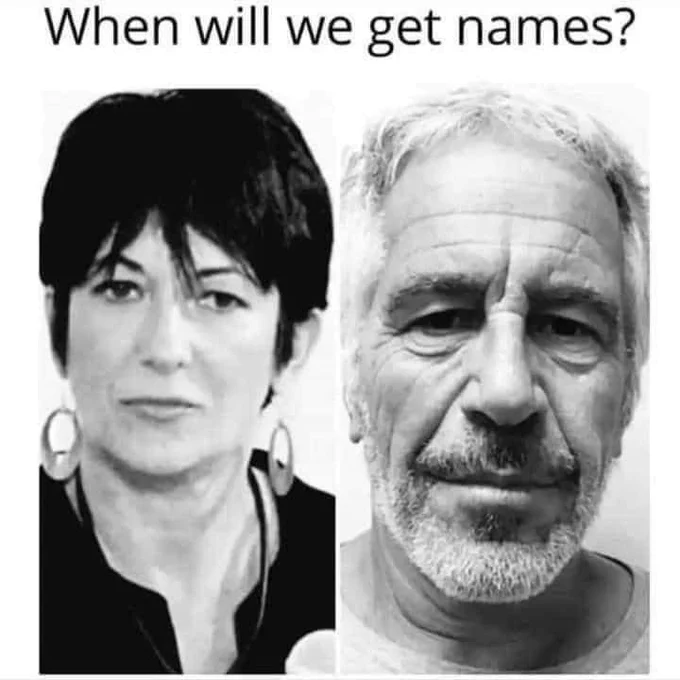
Ghislaine Maxwell and Jeffrey Epstein
This image, with no further comment, was posted on Twitter the other day. Maybe seeing it will trigger memories of Epstein's death and of the popular meme, "Jeffrey Epstein didn't kill himself." Maybe it also makes you wonder, "Yeah, whatever came of that whole Epstein thing? Wasn't Bill Clinton involved? Or Bill Gates? Or Stephen Hawking? Somebody's covering something up."

In this post, I hope to convince you that everything implied by this social media post is bullshit.

First, the post reaffirms a long-standing conspiracist trope: the notion that in the halls of political and corporate power, dark, unspeakable things are happening that cannot abide the light of day. And the reason we don't know about these things is because powerful people are hiding them from us.

What's conspiracist about this is that it's conveniently hermetic and unfalsifiable. If there's no evidence of this allegation (beyond anonymous people on the internet repeating it to each other), that's simply because the perpetrators are just so darn good at hiding the evidence. The idea of highly effective secrecy among the presumed conspirators is crucial for any self-respecting conspiracy theory. Nobody keeps secrets better than the real plotters of 9/11, the people who are hiding the existence of extraterrestrials from us, or the people who faked the moon landing. So it is with the people surrounding Jeffrey Epstein.

What's equally important is that the truth being hidden is unspeakable. A man with a net worth of $600 million setting up his own private pedophile ring is monstrous, but Epstein is too unknown, and his sexual abuse too banal and depressing, to really morbidly fascinate the public. That's why the theory involves people who are more famous, and why their presumed crimes make Epstein look like a foot soldier, rather than the monster he actually was.

What's more, the theory must have staying power, and this one does. Because it can never be disproven, it will fester forever. Asking a vague question like "When will we get names?" reinforces the idea that "we" are expecting this question to be answered, the ugly truth to be exposed, someday. By implication, it also means that "they" are actively keeping the truth hidden from us. Note that no concrete action —file a lawsuit, talk to your Congressperson, hire a private investigator— is ever taken or advocated to find out the answer. Rather, the question is just asked endlessly, over and over again.

But if you step away from the mindset for a minute and consider the question honestly, it falls apart under even the smallest amount of scrutiny. The implication is that because Epstein is dead and Maxwell is not singing, we'll never find out who did all these nonspecific but horrible crimes. But the reality is that there are other people involved in this sordid story who could shed light on other co-conspirators. These are the people who are conspicuously absent from all these conspiratorial viral posts. It's Epstein's victims. Do you know their names? Do you know how many there are? Shouldn't these women be the most important people in the story? And for the purposes of this discussion, wouldn't they be able to point the finger at their abusers?

They're certainly not afraid to point the blame at rich, powerful people. They've testified against Epstein. They've testified against Maxwell. Virginia Giuffre has accused Prince Andrew of sexual assault. It's a logical conclusion that whoever they didn't mention by now, wasn't involved in some massive secret sex abuse scandal, of which there is no concrete proof.

A conspiracist who reads the previous paragraph will never admit that it's a good point. Instead, they will look for, or dream up, any evidence, no matter how contorted, that can make the theory hermetic and unfalsifiable again. The conspiracist doesn't care about the victims, and never has. They will happily, for example, somehow transform the victims into co-conspirators, so long as it keeps the theory safe and unassailable. What matters is safeguarding the theory, not presenting the facts.

We will never get names, because there are no names to get. It's a narrative, a story, a grim fairy tale about people we love to hate anyway. People like Clinton or Gates will never be able to completely debunk the allegation that they are secretly abusing children. Engaging with the theory in any way, especially denying it, will only heighten the suspicion.

And yes, Jeffrey Epstein did kill himself. Of course he did. He was a man of incredible wealth and power, who abused minors for decades with impunity, only to find himself in a decrepit jail cell, sure to face life imprisonment without the possibility of parole. His fate would have been much worse than Maxwell's, who's doing 20 years. He'd made a failed suicide attempt days before the successful one. And if you think his every move should have been closely observed by prison guards, you don't know the American prison system very well. The only thing keeping you from believing this evident truth is the tantalizing notion that there is more to this than the drab, depressing and disgusting reality that meets the eye.

The Hearing

"So what you're telling us, Dr. Nichols, is that Jeff Zuckerson, the CEO of MetaTech, is not a psychopath?" "That's ...